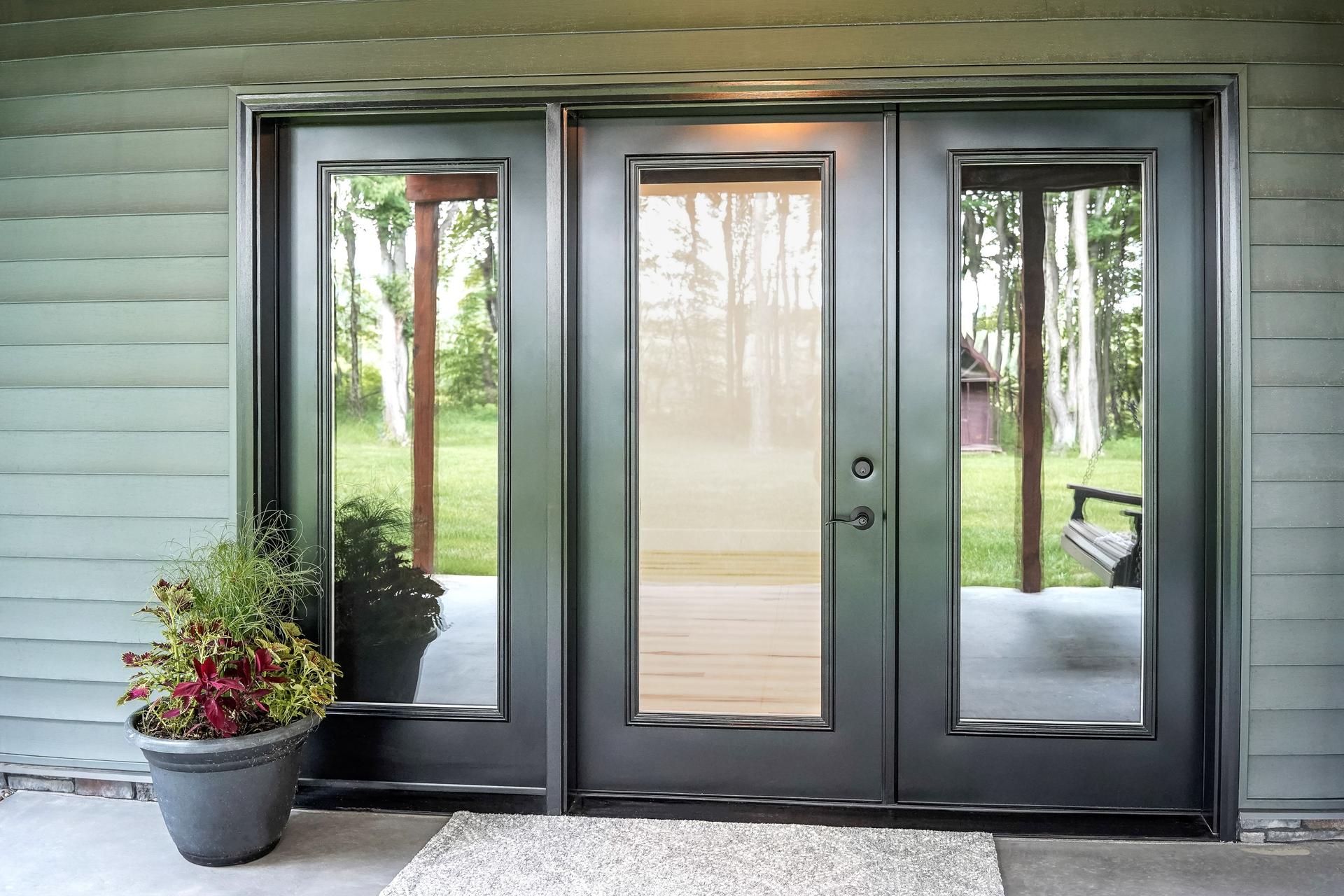
Residential Door Replacement & Installation in NJ
On this page
Doors are the part of a house people replace reactively. A window gets replaced because someone decided to upgrade; a door gets replaced the week after it stops locking, or the month after somebody put a foot through the bottom panel. Which means most homeowners are making a $1,500 to $5,000 decision under mild pressure, with a contractor already standing in the hallway.
This is the reference for making that decision slowly instead. It covers what exterior door replacement and installation actually cost in New Jersey, how entry, patio, storm and screen doors differ in what they're for and what they run, when a door is genuinely worth repairing rather than replacing, and what separates a proper installation from one that will be draughty by February. Where a topic needs more room than a hub page allows, there are deeper guides linked through.
What Does Door Replacement Cost?
| Door type | Typical installed cost |
|---|---|
| Exterior entry — slab only | $500–$1,500 |
| Exterior entry — pre-hung | $1,000–$3,500 |
| Fibreglass or steel entry, mid-range | $1,500–$3,000 |
| Solid wood or custom entry | $3,000–$8,000+ |
| Sliding patio door | $1,500–$4,000+ |
| French doors | $2,000–$5,000+ |
| Storm door | $350–$1,200 |
Two numbers drive everything: which door, and whether the frame goes with it.
National ranges to calibrate expectations. Every real quote comes off a measured opening.
Slab or Pre-Hung — the Decision That Moves the Price
A slab is the door on its own. It hangs on your existing frame and hinges. If the frame is straight, sound, and the hinge positions work, a slab is dramatically cheaper and the job is quicker.
A pre-hung door arrives already mounted in a new frame, and the whole assembly goes into the rough opening. You need this when the frame has rotted, when the opening has gone out of square, or when you're changing the door size or swing.
Homeowners default to pre-hung because that's what the showroom sells. Plenty of entries only need a slab. Worth asking the question before you're quoted for the expensive version of a job you don't need.
What Else Moves It
Material sits at the centre of the price. Steel is the cheapest and the most secure per dollar, but it dents and the dents are permanent. Fibreglass costs more, holds paint and woodgrain finishes well, and does not rot, warp or dent — it's the default recommendation for most South Jersey entries. Wood is the most attractive and the most maintenance; on a west-facing entry with no overhang it will need refinishing on a cycle you'll resent.
After material: glass. Sidelights, transoms and decorative glass units add real cost. So does hardware — a multi-point lock is a meaningful upgrade over a single deadbolt and prices accordingly. And the condition of the opening, which nobody can price from a phone call.
The Main Door Types, and What Each One Is Actually For
Entry and Front Doors
The main exterior door. This is the one carrying security, weather sealing, insulation and most of your kerb appeal at the same time, which is why it costs what it costs.
The current default for this region is an insulated fibreglass door with a steel or composite core. It handles coastal humidity without warping, takes a woodgrain finish convincingly, and doesn't dent when a delivery driver drops something against it.
Patio and Sliding Doors
Large glass, and they move — which means they wear in a way that hinged doors don't. A patio slider rides on roller wheels that flatten over years and are cheap to replace.
The mistake here is expensive: a sticking, grinding patio door is nearly always a roller or track fault costing $150 to $350, not a door needing $1,500 to $4,000 of replacement. We wrote a full guide to sliding glass door repair for exactly this reason.
French and Double Doors
Two hinged panels meeting in the middle, usually mostly glass. Better light and a wider opening than a slider, and they don't have rollers to wear out. The trade-off is space — they swing, so they need clearance — and alignment, because two doors meeting in the middle have twice as many ways to sit wrong.
Storm Doors
A secondary door mounted outside the entry door. It cuts draughts, protects the entry door from weather and UV, and lets you open the house for air without opening it to insects. Cheapest meaningful upgrade on this list at $350 to $1,200 installed, and the one with the best return per dollar. Full detail in our storm door installation guide.
Screen and Retractable Doors
Insect screening, either as a sliding panel alongside a patio door or as a retractable unit that rolls away when it isn't needed. Screens are almost always repairable rather than replaceable — a torn mesh is a re-screen, not a new door.
Repair or Replace?
Doors get replaced more often than they need to be. Before accepting a replacement quote, work out which problem you actually have.
Usually a Repair
It sticks or binds. Most often loose hinge screws letting the door drop, or a house that has settled slightly. Longer screws into the framing solve a surprising share of sticking doors for the cost of nothing.
It draughts. Weatherstripping compresses and hardens over years, and door sweeps wear through at the threshold. Both are inexpensive, replaceable parts.
It won't latch. Usually a strike plate that needs moving a few millimetres, or a latch mechanism that has worn.
It's scuffed, faded or dated. Steel and fibreglass doors can be refinished. A door that looks tired is not a door that has failed.
Genuinely a Replacement
The frame or sill is rotted. Once the frame has gone, hanging a new door on it is throwing money at a rotten opening. This is the most common legitimate reason for a pre-hung replacement.
The opening is out of square. A settled opening cannot be corrected by adjusting the door.
The door is damaged through — a cracked or delaminated slab, a rusted-through steel skin, a kicked panel.
The insulated glass has failed. Fogging between the panes on a door glass unit or patio panel. Sometimes the unit alone can be replaced, which is worth checking first.
It won't lock. Treat this as urgent regardless of which category it falls into. A door that doesn't secure is a security problem tonight, not a project for spring.
What a Proper Installation Involves
A good door installed badly performs worse than a mid-range door installed well. This is the part homeowners can't easily evaluate, so it's worth knowing what should happen.
The opening gets measured and checked for square and plumb before anything is ordered — not after the door arrives. The old unit comes out, and the framing underneath gets inspected for rot and water damage, which is frequently where a straightforward job turns into a bigger one. The new unit is set plumb, level and square, and shimmed at the hinges and strike so it stays that way.
Then it gets sealed properly: flashing at the sill, insulation in the gap between frame and rough opening, and exterior caulk. And finally the door is adjusted — hinges, sweep, strike, and lock — so it closes with a click rather than a shove.
Skipping the shimming and sealing steps is how you end up with a new door that draughts.
Doors in South Jersey Specifically
Three regional realities are worth planning around.
Salt air, near the shore. Within a mile or two of the water in Wildwood, Ocean City or Marmora, hardware corrodes noticeably faster. Stainless or properly coated hinges, handles and locks are worth specifying, and steel doors need their finish kept intact.
Humidity, everywhere. Wood doors move seasonally in this climate. Fibreglass doesn't, which is a large part of why it dominates local replacements.
Settled older housing stock. A lot of South Jersey homes are old enough that openings are no longer square. This is the single most common reason a job turns out to need a pre-hung rather than a slab, and it's why measuring in person matters.
Get a Door Measured Before You Get It Quoted
If a door in your house sticks, draughts, won't lock, or has simply stopped looking like something you want at the front of the house, the useful first step is having someone tell you which of the two categories above you're in. Half the time it's a repair.
South Jersey Glass & Door has been fitting and repairing doors across South Jersey for nearly 100 years — entry doors, patio and sliding doors, storm doors, screens, and the glass in all of them. We measure the opening, tell you whether it needs a slab or a pre-hung, and quote it honestly. Across Cumberland, Gloucester, Salem, Camden, Burlington, Atlantic, and Cape May Counties.
Call (856) 205-4741 for a free quote, or visit any of our five NJ locations.
South Jersey Glass & Door operates five branches across southern New Jersey — Vineland, Berlin, Glassboro, Ocean City–Marmora, and Wildwood. Commercial glazing, doors, frames & hardware, residential services, and 24/7 emergency response.
Frequently Asked Questions
How much does it cost to replace an exterior door?
Exterior door replacement generally runs $1,000 to $5,000 installed. A slab replacement reusing your existing frame is far cheaper, often $500 to $1,500, while a pre-hung door including a new frame typically runs $1,000 to $3,500. Mid-range fibreglass and steel entries sit around $1,500 to $3,000, and solid wood or custom doors run from $3,000 upward.
What's the difference between a slab and a pre-hung door?
A slab is the door panel alone, hung on your existing frame and hinges — cheaper and quicker, and the right choice when the frame is straight and sound. A pre-hung door comes already mounted in a new frame and installs into the rough opening, which is necessary when the frame is rotted, the opening is out of square, or the size or swing is changing.
How long does door installation take?
A straightforward slab replacement on a sound frame is usually a couple of hours. A pre-hung exterior door typically takes half a day. If the framing underneath turns out to be rotted or the opening needs rebuilding, it takes longer, which is why the opening should be inspected before the door is ordered.
Should I repair or replace my door?
Sticking, draughting, a latch that won't catch, or worn finish may be repairable with hinge, weatherstrip, sweep, strike plate or refinishing work. Have rot, frame movement and damage assessed before choosing a repair or full replacement. Failed insulated glass does not automatically mean replacing the whole door: the glass unit can often be replaced separately when the door and frame are sound.
What is the best material for an exterior door in New Jersey?
Insulated fibreglass is the usual recommendation for this region. It doesn't rot, warp or dent, it handles coastal humidity and salt air better than wood or steel, and it takes a woodgrain finish convincingly. Steel is cheaper and very secure but dents permanently. Wood looks best and needs the most upkeep, particularly on a sun-facing entry with no overhang.
Can I replace just the glass in my door?
Often, yes. If a decorative or insulated glass unit in a door has fogged or cracked but the door itself is sound, the glass unit can frequently be replaced on its own for far less than a new door. It's worth having checked before accepting a full replacement quote.
Do I need a permit to replace a door in New Jersey?
Replacing a door in an existing opening of the same size is commonly treated as a like-for-like repair, while enlarging an opening or cutting a new one generally requires a permit because it affects the structure. Requirements vary by municipality, so confirm with your local construction office before work starts.
Related reading: front window replacement guide.
Get a Free Quote
Tell us about your project and the South Jersey Glass & Door team will follow up with a free, no-obligation quote.
Prefer to call? Reach your nearest branch
Vineland
Vineland, NJ
Berlin
Berlin, NJ
Glassboro
Glassboro, NJ
Ocean City - Marmora
Marmora, NJ
Wildwood
Wildwood, NJ
Online quote scheduling is coming soon. For now, submit the form above or call your local branch and we'll take it from there.